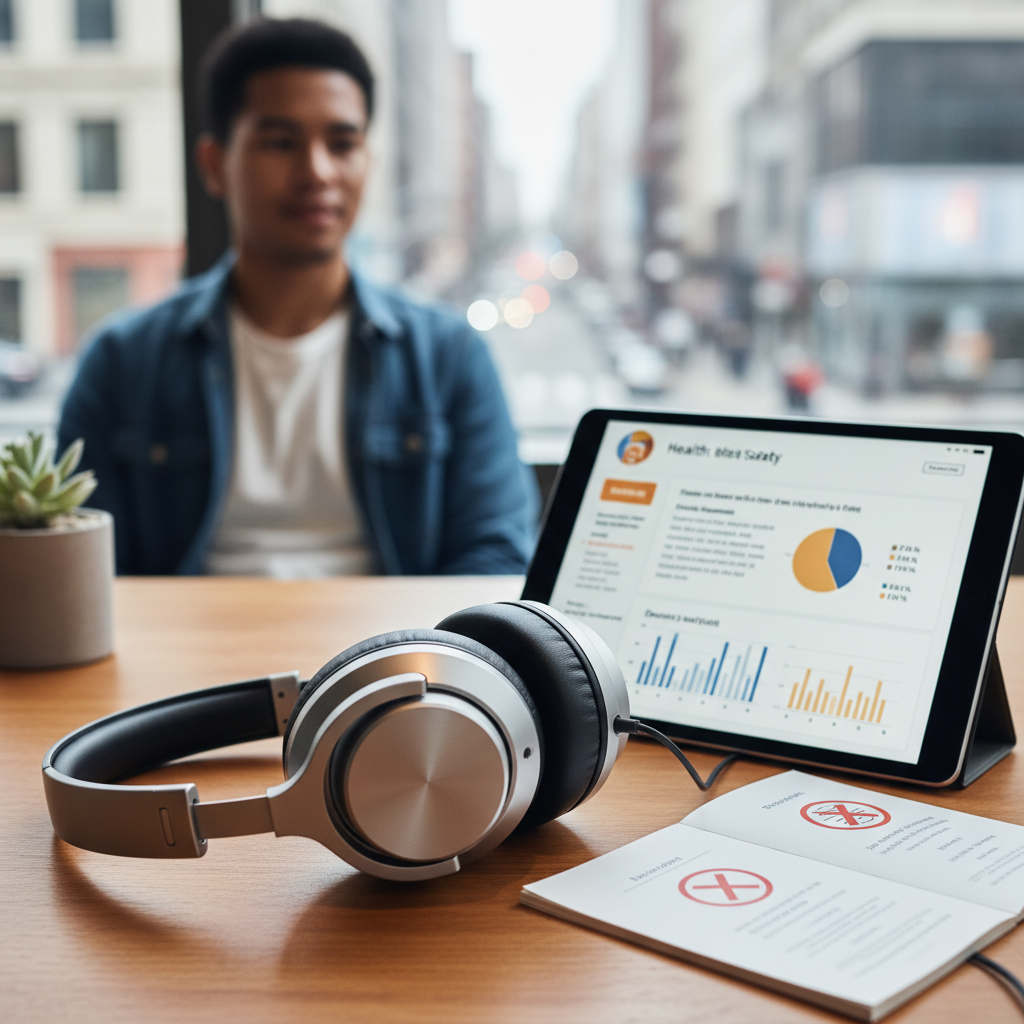
In the vast landscape of personal audio, two types of headphones frequently stand at opposite ends of the spectrum: noise cancelling headphones and studio headphones. While both promise an immersive auditory experience, their fundamental designs and purposes cater to vastly different needs. As an audio technician with over a decade of experience, I’ve seen countless individuals grapple with this choice, seeking clarity amidst the buzz of marketing and technical jargon. Understanding the core distinctions is paramount to finding the pair that truly enhances your daily life or professional craft. This comprehensive guide will dissect each type, compare their unique attributes, and help you navigate the decision-making process to select the headphones best suited for your specific requirements.
Types of Noise Cancelling Headphones
Noise cancelling headphones are engineered to create a personal oasis of calm, allowing you to focus on your audio content without distraction from the outside world. This is achieved through a combination of advanced technology and clever physical design.
Active Noise Cancelling (ANC)
|
Our Picks for the Best Noise cancelling headphones in 2026
As an Amazon Associate I earn from qualifying purchases.
|
||
| Num | Product | Action |
|---|---|---|
| 1 | Soundcore by Anker Q20i Hybrid Active Noise Cancelling Headphones, Wireless Over-Ear Bluetooth, 40H Long ANC Playtime, Hi-Res Audio, Big Bass, Customize via an App, Transparency Mode (White) |

|
| 2 | Bose QuietComfort Headphones - Wireless Bluetooth Headphones, Active Over Ear Noise Cancelling and Mic, USB-C Charging, Deep Bass, Up to 24 Hours of Playtime, Black |
|
| 3 | TAGRY Hybrid Active Noise Cancelling Headphones 100H Playtime Wireless Over Ear Bluetooth Headphone with Fast Charging Hi-Res Audio Comfort Earcups Headsets for Travel Home Office Phone PC Black |
|
| 4 | Bose QuietComfort Headphones - Wireless Bluetooth Headphones, Active Over Ear Noise Cancelling and Mic, USB-C Charging, Deep Bass, Up to 24 Hours of Playtime, Twilight Blue - Limited Edition Color |
|
| 5 | Apple AirPods Pro 3 Wireless Earbuds, Active Noise Cancellation, Live Translation, Heart Rate Sensing, Hearing Aid Feature, Bluetooth Headphones, Spatial Audio, High-Fidelity Sound, USB-C Charging |
|
| 6 | Sony WH-CH720N Noise Canceling Wireless Headphones Bluetooth Over The Ear Headset with Microphone and Alexa Built-in, Black New |
|
| 7 | Hybrid Active Noise Cancelling Headphones 120H Playtime Wireless Headphones Bluetooth 6.0 Over Ear Headphones with 6 ENC HD Call Mic, Hi-Res 360° Spatial Audio ANC Headphone for Travel Workout Black |
|
| 8 | bmani Hybrid Active Noise Cancelling Headphones,120H Playtime Wireless Headphones Bluetooth 6.0 with Power Display, 6-Mic ENC Calls, 360° Spatial Audio Over Ear Headphones Headset for Travel Game |
|
| 9 | Apple AirPods 4 Wireless Earbuds, Bluetooth Headphones, with Active Noise Cancellation, Adaptive, Transparency Mode, Personalized Spatial Audio, USB-C Charging Case, Wireless Charging, H2 Chip |
|
| 10 | Soundcore by Anker Q20i Hybrid Active Noise Cancelling Headphones, Wireless Over-Ear Bluetooth, 40H Long ANC Playtime, Hi-Res Audio, Big Bass, Customize via an App, Transparency Mode (Black) |
|
Active Noise Cancelling (ANC) technology represents a significant leap in environmental sound reduction. It functions by employing miniature microphones that actively listen to ambient noise around you. When these microphones detect external sound waves, the headphone’s internal electronics generate an inverse sound wave, precisely out of phase with the incoming noise. When these opposing waves meet, they effectively cancel each other out through a process known as destructive interference, diminishing the perceived external sound.
This technology is particularly effective at eliminating persistent, low-frequency sounds, such as the drone of an airplane engine, the hum of an air conditioner, or the rumble of a train. The benefits are substantial: improved focus in noisy environments, potential hearing protection by enabling lower listening volumes, and a more immersive entertainment experience. However, this electronic processing can sometimes subtly “color” the audio, meaning the sound might not be perfectly neutral, which is a consideration for critical listeners. ANC functionality also relies on battery power, adding a dependency that traditional headphones do not have.
Passive Noise Cancelling
Passive noise cancelling, often referred to as noise isolation, relies entirely on the physical design and materials of the headphones to block out external sounds. This is the simplest form of noise reduction and acts as the first line of defense against unwanted noise. Headphones achieve this by creating a physical barrier between your ears and the surrounding environment through dense earcups, snug-fitting ear tips, and sound-absorbing materials like high-quality foam or silicone.
The effectiveness of passive noise cancelling largely depends on how well the headphones seal your ear, physically obstructing sound waves from reaching your eardrum. While less effective against deep, low-frequency rumbles than ANC, passive isolation excels at muffling mid-to-high frequency noises like nearby conversations, keyboard clicks, or general office chatter. Many high-quality noise cancelling headphones integrate robust passive isolation alongside ANC to provide a more comprehensive noise reduction solution, tackling a broader spectrum of frequencies. Unlike ANC, passive noise cancelling requires no power, offering consistent isolation whenever the headphones are worn.
The Distinct World of Studio Headphones
Studio headphones operate with a fundamentally different philosophy from their noise-cancelling counterparts. Their primary mission is not to block out the world, but to reveal the audio truth within it, prioritizing accuracy and detail above all else.
Precision and Flat Frequency Response
The hallmark of studio headphones is their commitment to an accurate and “flat” frequency response. This means they are designed to reproduce sound as faithfully as possible to the original recording, without artificially boosting or cutting specific frequencies like bass or treble. Unlike consumer headphones, which often enhance certain frequencies to create a more “pleasurable” listening experience, studio headphones aim for neutrality. This analytical sound signature allows audio engineers, producers, and serious audiophiles to hear every nuance, flaw, and detail in a recording, ensuring that mixing and mastering decisions are based on the true sonic characteristics rather than any coloration introduced by the headphones.
Such precision is crucial in professional audio environments, where identifying and rectifying imperfections is paramount. A flat frequency response helps ensure that music mixed on these headphones will translate predictably and consistently across a wide range of playback systems. “The objective is to hear what’s truly there, not what the headphones want you to hear,” as many seasoned audio professionals would assert.
Open-back vs. Closed-back Designs
Studio headphones come in two primary designs that significantly impact their sound characteristics and ideal use cases: open-back and closed-back.
-
Open-back studio headphones feature perforated earcups that allow air and sound to flow freely in and out. This design creates a wider, more natural soundstage, often described as feeling like the music is playing in the room around you, akin to listening through loudspeakers. The open design also prevents sound pressure buildup, enhancing comfort during extended listening sessions and reducing ear fatigue. However, this transparency comes at the cost of isolation; open-back headphones offer virtually no passive noise cancellation and leak sound, making them unsuitable for noisy environments or recording where microphone bleed is a concern. They are best reserved for critical listening, mixing, and mastering in quiet, controlled studio settings.
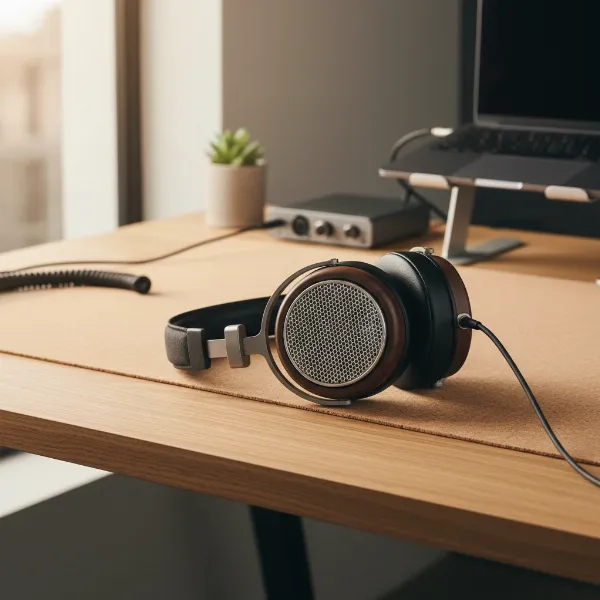 Open-back studio headphones on a desk, illustrating their airy design for critical listening and mixing in a quiet environment.
 -
Closed-back studio headphones have sealed earcups that physically block external noise from entering and prevent sound from leaking out. This design provides significant passive noise isolation, making them ideal for recording vocalists or instrumentalists to prevent click tracks or monitoring audio from bleeding into live microphones. They are also preferred for tracking in noisy studio environments or for focused listening where some external noise needs to be reduced. Closed-back headphones typically offer a more intimate soundstage with a more pronounced bass response compared to open-back models. While excellent for isolation, the sealed design can sometimes lead to increased heat buildup and a less natural soundstage for critical mixing compared to open-back counterparts.
Core Differences: Noise Cancelling vs. Studio Headphones
The fundamental differences between noise cancelling and studio headphones stem from their core design philosophies and intended applications. These distinctions are critical when deciding which type is best for you.
Purpose and Application
The primary purpose of noise cancelling headphones is to provide a tranquil listening experience by eliminating environmental distractions. They are designed for portability and versatility, excelling in noisy environments like commutes, offices, or travel, allowing users to enjoy music, podcasts, or simply find peace in chaos. Their focus is on the listener’s environment.
Studio headphones, on the other hand, are crafted for analytical listening and accurate sound reproduction. Their main application is in audio production (recording, mixing, mastering) or for audiophiles who demand to hear every detail as precisely as the artist intended. Their focus is on the fidelity of the audio source. They are typically less concerned with portability or external features, often remaining wired to maintain signal integrity.
Sound Accuracy and Enhancement
Noise cancelling headphones often feature a sound signature that is tailored for consumer enjoyment, which might include slight enhancements in bass or treble. While many offer excellent audio quality, the electronic processing involved in ANC can introduce subtle alterations to the sound, making them less suitable for tasks requiring absolute sonic neutrality.
Studio headphones prioritize a “flat” or “neutral” frequency response, meaning they aim to reproduce audio without any added color or emphasis on specific frequencies. This uncolored sound is essential for professionals to identify sonic imperfections and ensure their mixes translate well across different playback systems. Any perceived lack of “excitement” is actually a testament to their accuracy.
Noise Management Philosophies
Noise cancelling headphones actively cancel noise using electronics (ANC) and physically block it (passive isolation) to prevent external sounds from reaching your ears. This is an active battle against ambient sound.
Studio headphones, particularly closed-back models, rely solely on passive physical isolation to prevent sound from leaking in or out. Open-back studio headphones, conversely, embrace ambient sound, allowing it to interact with the audio for a more natural soundstage, effectively offering no noise reduction. Their approach to noise is either to contain it through physical barriers or to disregard it entirely in favor of an expansive sound.
Connectivity and Portability
Most modern noise cancelling headphones are designed for wireless connectivity (Bluetooth) and often feature built-in microphones for calls, along with foldable designs for easy portability. Their battery life is a key consideration, as ANC requires power.
Studio headphones are predominantly wired to ensure the purest signal path and avoid potential latency or compression inherent in wireless technologies. They are often larger, more robust, and less portable, emphasizing comfort for long hours in a static studio environment rather than on-the-go convenience.
Benefits of Each Headphone Type
Both noise cancelling and studio headphones offer distinct advantages that cater to different user needs and environments. Recognizing these benefits will help solidify your choice.
Noise Cancelling: Focus and Immersion
Noise cancelling headphones are champions of creating personal quiet spaces in bustling environments. They significantly improve your ability to concentrate, whether you’re working in a busy office, studying in a cafe, or trying to relax on a noisy commute. By reducing ambient noise, they enhance focus and productivity, allowing you to dive deeper into your tasks without distraction.
Beyond work, ANC headphones elevate your entertainment experience, making music, podcasts, and audiobooks more immersive and enjoyable. The reduced background noise allows you to perceive subtle details in your audio that might otherwise be masked. Furthermore, by cutting down external noise, these headphones enable you to listen at lower volumes, potentially protecting your hearing from the long-term effects of loud listening in noisy settings.
Studio: Critical Listening and Production
Studio headphones are indispensable tools for anyone involved in audio production or for audiophiles seeking an unadulterated listening experience. Their flat frequency response ensures that you hear audio exactly as it was recorded, without any artificial enhancements. This accuracy is crucial for making informed decisions during mixing and mastering, allowing engineers to identify sonic flaws and balance instruments correctly, ensuring the final product sounds great on any system.
The detailed sound reproduction of studio headphones can reveal subtleties in music that consumer-grade headphones might gloss over, offering a deeper appreciation for the artistry and production quality of your favorite tracks. Open-back studio headphones, in particular, provide an expansive soundstage that mimics a live listening environment, which is highly valued for critical analysis and a more natural auditory perspective.
Comparison Table: Noise Cancelling vs. Studio Headphones
| Feature | Noise Cancelling Headphones | Studio Headphones (Closed-back) | Studio Headphones (Open-back) |
|---|---|---|---|
| Primary Goal | Noise reduction, immersive listening | Accurate audio monitoring, sound isolation | Critical listening, expansive soundstage |
| Noise Mgmt. | Active Noise Cancelling (ANC) + Passive | High Passive Noise Isolation | Minimal to No Isolation, sound leaks out |
| Sound Profile | Enhanced for consumer enjoyment, some coloration | Neutral, accurate, tight bass | Very neutral, natural, expansive sound |
| Connectivity | Primarily Wireless (Bluetooth), some wired | Primarily Wired | Primarily Wired |
| Portability | High (often foldable, compact) | Moderate (can be bulky) | Low (less durable, open design) |
| Battery | Required for ANC | Not required | Not required |
| Ideal Use | Commuting, travel, open offices, casual listening | Recording, monitoring, noisy studio environments | Mixing, mastering, critical listening in quiet spaces |
| Typical Cost | Mid to High-End | Entry-level to High-End | Mid to High-End |
Buying Guide: Selecting Your Perfect Pair
Choosing between noise cancelling and studio headphones ultimately comes down to understanding your specific needs and priorities. There’s no single “best” option; only the best fit for you.
Identify Your Primary Need
Start by reflecting on how and where you’ll primarily use your headphones. Are you a frequent traveler seeking solace from engine noise and chatter, or an office worker needing to block out distractions? Then noise cancelling headphones are likely your ally. If your passion lies in creating music, editing audio, or dissecting every detail of a track in a quiet setting, studio headphones will serve you best. Consider your environment – a noisy commute demands different features than a quiet home studio.
Key Considerations
- Noise Reduction Level: For blocking out persistent ambient noise, ANC is superior. For higher frequency sounds or simply preventing sound leakage, robust passive isolation (found in both NC and closed-back studio headphones) is key.
- Sound Accuracy: If uncolored, neutral audio is paramount for professional work or analytical listening, prioritize studio headphones with a flat frequency response. For casual listening, a slightly enhanced sound profile from NC headphones might be more enjoyable.
- Comfort and Build Quality: Both types offer excellent comfort in their premium models, but studio headphones are often built for durability and long wear times, sometimes at the expense of sleek design. Try them on if possible.
- Connectivity and Battery Life: If wireless freedom and portability are crucial, especially for travel, noise cancelling headphones with good battery life are essential. For studio work, wired connectivity ensures reliability and optimal audio fidelity.
- Specific Studio Features: If opting for studio headphones, decide between open-back for maximum soundstage and naturalness in quiet spaces, or closed-back for isolation during recording or in louder studio environments.
Budget and Value
Headphones span a wide price range. Noise cancelling headphones often command a higher price due to the integrated ANC technology. Studio headphones can range from very affordable entry-level models to extremely high-end professional tools. Determine your budget, but remember that investing in a quality pair that aligns with your primary use case will offer greater long-term satisfaction and performance. Don’t compromise on the features most important to your workflow or listening pleasure.
Top Picks by Application
- For Travel & Commuting: Look for ANC headphones with excellent battery life, strong active noise cancellation, and a comfortable, portable design. Brands like Sony and Bose are often top contenders.
- For Focused Work (Non-Audio Production): ANC headphones with comfortable earcups and reliable Bluetooth connectivity are ideal for creating a quiet bubble in an open-plan office or home environment.
- For Music Production & Mixing: Closed-back studio headphones are great for tracking (e.g., Audio-Technica ATH-M50x) due to their isolation. For mixing and mastering in quiet rooms, open-back studio headphones (e.g., Beyerdynamic DT 990 Pro, Sennheiser HD 650) offer superior soundstage and neutrality.
- For Audiophile Listening (Non-Production): High-quality open-back studio headphones or dedicated audiophile headphones are often preferred for their natural sound and detail retrieval in a quiet listening space.
Tips for Optimal Headphone Use and Care
Regardless of your choice, proper usage and maintenance will extend the life and performance of your headphones. These simple practices can make a significant difference.
Usage Best Practices
- Adjust Volume Appropriately: With noise cancelling headphones, the ability to block external sound means you can often listen at lower volumes, which is better for your hearing. For studio headphones, monitor at moderate levels to prevent ear fatigue and ensure accurate mixing decisions.
- Utilize Features Wisely: With ANC headphones, learn to use features like transparency mode to hear your surroundings when necessary. For studio headphones, understand the nuances of open-back versus closed-back in different stages of your production workflow.
- Regular Cleaning: Earpads and headbands can accumulate oils, sweat, and dirt. Gently clean them with a soft, damp cloth regularly to maintain hygiene and comfort. For studio headphones, this also helps prevent material degradation.
Proper Storage and Maintenance
- Protect from Impact: Always store your headphones in their case (if provided) or on a dedicated stand when not in use. This prevents accidental drops, tangles, and damage to fragile components.
- Avoid Extreme Conditions: Keep headphones away from direct sunlight, high humidity, and extreme temperatures, as these can degrade materials, affect battery life (for ANC), and impact sound quality. Water and moisture are particular enemies.
- Handle Cables with Care: For wired headphones, avoid yanking cables or storing them in tight, twisted bundles, which can lead to internal wire damage. If a cable is detachable, disconnect it properly rather than pulling.
Frequently Asked Questions
Why do studio headphones often lack features like Bluetooth and ANC?
Studio headphones prioritize pure, uncolored audio reproduction, which is essential for professional audio work. Features like Bluetooth introduce digital compression and potential latency, while Active Noise Cancelling involves electronic processing that can subtly alter the sound signature. To maintain absolute sonic accuracy and integrity, studio headphones typically opt for a wired connection and forgo ANC.
Can I use noise cancelling headphones for casual music listening?
Absolutely. Noise cancelling headphones are designed precisely for enhanced casual music listening, especially in noisy environments. By eliminating distractions like traffic, chatter, or engine hum, they allow you to immerse yourself more fully in your music and appreciate subtle details that would otherwise be masked by ambient noise.
Are open-back studio headphones good for gaming?
Open-back studio headphones can be excellent for gaming, particularly in quiet home environments, due to their expansive soundstage and precise audio imaging. This allows for better spatial awareness of in-game sounds like footsteps or distant shots. However, they offer no isolation, meaning game audio can leak out, and environmental sounds can distract you.
Do noise cancelling headphones truly protect my hearing?
While not a substitute for hearing protection in extremely loud environments, noise cancelling headphones can indirectly protect your hearing by allowing you to listen to audio at lower, safer volumes. By reducing background noise, you don’t need to crank up the volume to hear your content, thereby lessening the strain on your ears over time.
What is “flat frequency response” in simpler terms?
A “flat frequency response” means that the headphones reproduce all sound frequencies (from deep bass to sparkling treble) at their original intended loudness, without artificially boosting or cutting any part of the sound spectrum. It aims for a neutral, true-to-source audio representation, revealing the sound as it genuinely is, rather than enhancing it.
Can I use studio headphones for phone calls or video conferencing?
Many closed-back studio headphones can be used for calls if paired with an external microphone or an inline mic cable. However, since studio headphones prioritize sound accuracy over communication features, they often lack built-in microphones or advanced call management, making dedicated communication headsets or noise cancelling headphones generally better for calls.
Is passive noise cancelling as effective as active noise cancelling?
Passive noise cancelling is generally less effective than active noise cancelling, especially for low-frequency, continuous sounds like engine hums. Passive isolation primarily relies on physical barriers to muffle sound, while ANC actively counteracts noise using inverse sound waves. However, passive isolation can be more effective for higher-frequency sounds like human voices or keyboard clicks.