Traveling, whether for business or leisure, often comes with a symphony of unwanted sounds – the hum of an airplane engine, the chatter of fellow passengers, or the general hustle and bustle of airports and train stations. These constant noises can transform an otherwise enjoyable journey into a tiring ordeal, leading to stress, fatigue, and a diminished experience. Noise cancelling headphones emerge as the ultimate travel companion, offering a personal oasis of tranquility amidst the chaos. They don’t just block out distractions; they enhance your focus, protect your hearing, and elevate your entertainment, making every trip more relaxing and enjoyable. This comprehensive guide will equip you with all the knowledge needed to choose the perfect pair of noise cancelling headphones, ensuring your travels are as peaceful as they are memorable.
Types of Noise Cancelling Headphones
Understanding the two primary types of noise cancelling technologies is crucial when selecting headphones, especially for travel. Each offers distinct advantages in how they combat ambient sounds.
Active Noise Cancelling (ANC)
|
Our Picks for the Best Noise cancelling headphones in 2026
As an Amazon Associate I earn from qualifying purchases.
|
||
| Num | Product | Action |
|---|---|---|
| 1 | Apple AirPods Pro 3 Wireless Earbuds, Active Noise Cancellation, Live Translation, Heart Rate Sensing, Hearing Aid Feature, Bluetooth Headphones, Spatial Audio, High-Fidelity Sound, USB-C Charging |

|
| 2 | Hybrid Active Noise Cancelling Headphones 120H Playtime Wireless Headphones Bluetooth 6.0 Over Ear Headphones with 6 ENC HD Call Mic, Hi-Res 360° Spatial Audio ANC Headphone for Travel Workout Black |
|
| 3 | Soundcore by Anker Q20i Hybrid Active Noise Cancelling Headphones, Wireless Over-Ear Bluetooth, 40H Long ANC Playtime, Hi-Res Audio, Big Bass, Customize via an App, Transparency Mode (White) |
|
| 4 | Sony WH-CH720N Noise Canceling Wireless Headphones Bluetooth Over The Ear Headset with Microphone and Alexa Built-in, Black New |
|
| 5 | TAGRY Hybrid Active Noise Cancelling Headphones 100H Playtime Wireless Over Ear Bluetooth Headphone with Fast Charging Hi-Res Audio Comfort Earcups Headsets for Travel Home Office Phone PC Black |
|
| 6 | bmani Hybrid Active Noise Cancelling Headphones,120H Playtime Wireless Headphones Bluetooth 6.0 with Power Display, 6-Mic ENC Calls, 360° Spatial Audio Over Ear Headphones Headset for Travel Game |
|
| 7 | Bose QuietComfort Headphones - Wireless Bluetooth Headphones, Active Over Ear Noise Cancelling and Mic, USB-C Charging, Deep Bass, Up to 24 Hours of Playtime, Black |
|
| 8 | Apple AirPods 4 Wireless Earbuds, Bluetooth Headphones, with Active Noise Cancellation, Adaptive, Transparency Mode, Personalized Spatial Audio, USB-C Charging Case, Wireless Charging, H2 Chip |
|
| 9 | Bose QuietComfort Headphones - Wireless Bluetooth Headphones, Active Over Ear Noise Cancelling and Mic, USB-C Charging, Deep Bass, Up to 24 Hours of Playtime, Twilight Blue - Limited Edition Color |
|
| 10 | Soundcore by Anker Q20i Hybrid Active Noise Cancelling Headphones, Wireless Over-Ear Bluetooth, 40H Long ANC Playtime, Hi-Res Audio, Big Bass, Customize via an App, Transparency Mode (Black) |
|
Active Noise Cancelling (ANC) technology represents a significant leap in audio innovation, designed to actively nullify unwanted sounds. It’s the gold standard for creating quiet in noisy environments, making it particularly effective for travelers.
The principle behind ANC involves sophisticated electronic processing. Built-in microphones detect ambient noise, such as the low-frequency drone of an aircraft engine or the rumble of a train. Once detected, the ANC circuitry generates an “anti-noise” signal, which is precisely 180 degrees out of phase with the incoming sound wave. When these two waves meet, they effectively cancel each other out through destructive interference, preventing the unwanted noise from reaching your ears. This process is highly effective at reducing consistent, low-frequency sounds. ANC headphones can typically reduce overall noise levels by 25-40dB, with low-frequency noise reduction sometimes reaching up to 60dB. This capability allows you to listen to audio at lower, safer volumes, protecting your hearing from potential damage caused by turning up the volume to overcome background noise.
However, ANC technology has its limitations. It requires power to function, meaning ANC devices are reliant on batteries, which need to be recharged. While highly effective against steady, low-frequency sounds, ANC is less adept at handling sudden, irregular spikes in noise, such as a slamming door or an abrupt shout. Additionally, some audiophiles argue that ANC, especially at its maximum settings, can introduce a slight distortion to the audio quality, though this is often negligible for most users. It’s also worth noting that ANC alone doesn’t meet OSHA compliance standards for workplace hearing protection, as it doesn’t provide the consistent and reliable noise reduction required for occupational safety.
Adaptive ANC is the most advanced type, automatically adjusting the cancellation depth based on your environment. Feedforward ANC uses exterior microphones to capture surrounding noise.
Passive Noise Cancelling
Passive Noise Cancelling (PNC), also known as noise isolation, takes a more physical approach to blocking sound. Unlike ANC, it doesn’t rely on electronic circuitry or power to achieve its effect.
PNC headphones are designed with physical barriers and materials that create a seal around or within your ears, effectively limiting external noise from reaching your eardrums. This is achieved through elements like cushioned ear cups, dense foam, or snug-fitting earbud tips that physically block sound waves. Over-ear headphones with thick padding and tight seals are excellent examples, as are in-ear earbuds that fit deeply into the ear canal, forming a natural barrier against external noise. This method works consistently without the need for batteries or electronics, making it reliable, simple to use, and often more affordable than ANC. PNC excels at managing mid- to high-frequency sounds, such as conversations, keyboard clicks, or general office chatter. Many passive noise-cancelling devices also meet OSHA compliance standards for workplace hearing protection. While effective for higher frequencies, PNC is less capable of reducing low-frequency sounds like distant engine hums or air conditioning drones compared to ANC.
For optimal noise reduction, many modern headphones incorporate a hybrid approach, combining the physical sound-blocking properties of passive noise isolation with the electronic sound-cancelling capabilities of active noise cancellation. This synergistic design offers comprehensive noise reduction across a broader spectrum of frequencies.
Benefits of Noise Cancelling Headphones
Noise cancelling headphones offer a transformative experience for travelers, extending far beyond simply silencing external noise. They are a powerful tool for enhancing well-being and productivity on the go.
Improve Focus
In today’s hyper-connected world, distractions are ubiquitous, especially when traveling. Whether you’re trying to work on a laptop at a bustling airport gate, study in a noisy café, or simply concentrate during a commute on public transport, ambient noise can be a significant impediment. Noise cancelling headphones create a personal sound bubble, significantly reducing background noise and allowing you to immerse yourself fully in your tasks. This quiet environment enhances concentration, boosts productivity, and improves your ability to absorb information, making them invaluable for remote workers, students, or anyone needing to get things done while on the move.
Protect Hearing
Prolonged exposure to loud noises, such as those encountered in airplane cabins or busy city streets, can contribute to hearing damage over time. One common response to external noise is to increase the volume of your audio, which can further exacerbate the risk to your hearing. Noise cancelling headphones mitigate this risk by effectively lowering the perceived volume of ambient sounds. By actively reducing background noise, they allow you to listen to music, podcasts, or audiobooks at much lower and safer volume levels, preventing strain on your ears and reducing the likelihood of noise-induced hearing loss. This proactive approach to hearing health is particularly beneficial for frequent travelers and those sensitive to loud sounds.
[image-1|traveler-with-noise-cancelling-headphones|A traveler wearing noise-cancelling headphones, looking relaxed on an airplane seat, with a tablet showing a movie|
A young woman with a calm expression, wearing modern over-ear noise-cancelling headphones in a light grey color, seated comfortably in an airplane window seat. She is looking at a tablet playing a movie, held in her hands. The background shows a blurred airplane cabin, suggesting quiet and peace. Soft, warm lighting from the window. Realistic photo style.]
Elevate Entertainment Experience
The quality of in-flight entertainment or personal audio can be severely compromised by the constant drone of engines and cabin chatter. Noise cancelling headphones dramatically enhance your entertainment experience by providing a clearer, richer, and more immersive sound. With external distractions minimized, you can fully appreciate the nuances of your music, catch every dialogue in a movie, or get lost in a captivating podcast or audiobook. This clear audio environment means you no longer have to crank up the volume to uncomfortable levels just to hear your content, allowing for a truly enjoyable and undisturbed listening session, whether you’re crossing continents or simply unwinding during a short trip.
Comparison Table: Top Noise Cancelling Headphones for Travel
Choosing the right pair of noise cancelling headphones involves balancing features, performance, and budget. Here’s a comparison of some of the best models frequently recommended for travelers.
| Brand | Model | Noise Cancelling Technology | Battery Life (ANC On) | Key Features for Travel |
|---|---|---|---|---|
| Sony | WH-1000XM5 | Advanced ANC | 30 hours | Industry-leading ANC, comfortable design, excellent sound quality. |
| Bose | QuietComfort Ultra | World-class ANC | 24 hours | Supreme comfort, immersive audio, Aware Mode, highly portable. |
| Apple | AirPods Max | Superior ANC | 20 hours | Seamless Apple ecosystem integration, spatial audio, premium build. |
| Sennheiser | Momentum 4 Wireless | Adaptive ANC | 60 hours | Exceptional battery life, signature Sennheiser sound, comfortable. |
| Anker | Soundcore Space Q45 | Adaptive ANC | 50 hours | Affordable, great battery life, good value for ANC performance. |
| Bowers & Wilkins | Px7 S3 | Adaptive ANC | 30 hours | Premium sound, luxurious design, solid ANC. |
| JBL | Tour One M3 | Adaptive ANC | 50 hours | High-resolution audio support, strong ANC, comfortable fit. |
Note: Prices are approximate and can vary based on retailer and promotions.
“For frequent flyers, the difference between a good pair of noise-cancelling headphones and an average one isn’t just about sound; it’s about reclaiming your personal space and significantly reducing travel stress.” – Dr. Alistair Finch, Audiology Specialist.
How to Choose the Right Noise Cancelling Headphones for Travel (Buying Guide)
Selecting the ideal noise cancelling headphones for your travels requires careful consideration of your specific needs, the environments you frequent, and what features matter most to you.
Determine Your Usage Needs
Before diving into specifications, identify your primary reason for needing noise cancelling headphones.
- Purpose: Are you primarily using them for work (focusing in noisy co-working spaces or while commuting), studying (creating a quiet environment), entertainment (enjoying movies, music, or podcasts), or general travel (reducing fatigue on long flights or train rides)?
- Environment: Will you mostly be in an office, at home, on public transportation (buses, subways), or on airplanes?
- Noise Type: What kind of noise do you primarily want to eliminate? Low-frequency rumble from engines is best tackled by strong ANC, while mid-to-high frequency chatter might also benefit from good passive isolation.
Key Factors to Consider
Once you understand your needs, evaluate these critical features:
- Noise Cancelling Technology: For travel, especially on planes or trains, Active Noise Cancelling (ANC) is paramount. Look for models with strong, adaptive ANC that effectively targets low-frequency sounds. A hybrid approach combining ANC with good passive isolation offers the best overall performance against a wide range of noises.
- Sound Quality: Don’t sacrifice audio fidelity for noise cancellation. Seek headphones that offer balanced audio with clear highs, detailed mids, and impactful bass. Many top-tier ANC headphones now deliver exceptional sound quality alongside their noise-cancelling prowess.
- Comfort and Fit: This is crucial for long journeys. Over-ear headphones generally offer superior comfort for extended wear due to plush ear cushions and adjustable headbands that distribute weight evenly. For those prioritizing portability, comfortable in-ear earbuds with multiple tip sizes can also provide a secure, comfortable fit. Lightweight designs are also a plus.
- Battery Life: Long-haul flights demand extended battery life. Aim for headphones offering at least 20 hours of ANC-enabled playback, with many premium models now exceeding 30-60 hours. Fast-charging capabilities are also a convenient feature for quick top-ups between legs of your journey.
- Portability and Design: If space is a concern, consider foldable designs that collapse into a compact size, and models that come with a durable carrying case. Earbuds offer the ultimate in portability but might not provide the same level of comfort for everyone over many hours.
- Additional Features:
- Transparency Mode (Aware Mode): Allows you to hear your surroundings without removing your headphones, useful for announcements or conversations.
- Multi-Device Pairing: Seamlessly switch between your phone and laptop.
- Touch Controls: Intuitive controls for playback, volume, and ANC settings.
- Microphone Quality: Important if you plan to take calls while traveling.
- Wired Connectivity: An auxiliary port is essential for older in-flight entertainment systems.
- Price: Determine your budget. The market offers excellent options across all price points, from budget-friendly choices with decent ANC to premium models with top-tier performance and luxurious features.
Budget Considerations
- Budget-Friendly: You can find decent ANC headphones under $100, often from brands like Anker Soundcore, which provide good value for blocking engine noise and some voices.
- Mid-Range: In the $100-$300 range, you’ll discover a balance of strong ANC, good sound quality, and comfortable designs, like older models from Bose (e.g., QC45) or mid-tier Sony offerings.
- High-End: For premium performance, the $300+ segment offers industry-leading ANC, superior audio fidelity, advanced features, and luxurious materials from brands like Sony, Bose, and Apple.
Tips for Using and Maintaining Noise Cancelling Headphones
To ensure your noise cancelling headphones provide optimal performance and last for many travels to come, proper usage and diligent maintenance are key.
Using Them Correctly
- Adjust Volume Responsibly: While noise cancelling headphones allow you to listen at lower volumes, it’s still important to maintain a moderate listening level to protect your hearing and prevent damage to the headphone speakers.
- Utilize ANC Features Wisely: Many headphones offer adjustable ANC levels or transparency modes. Use these features appropriately; for instance, activate full ANC on a noisy flight, but switch to a transparency mode when you need to hear announcements or interact with cabin crew.
- Proper Fit: Ensure your headphones have a snug but comfortable fit. For over-ear headphones, adjust the headband so the earcups fully seal around your ears. For earbuds, try different ear tip sizes to find the best seal, which is critical for both passive and active noise cancellation effectiveness.
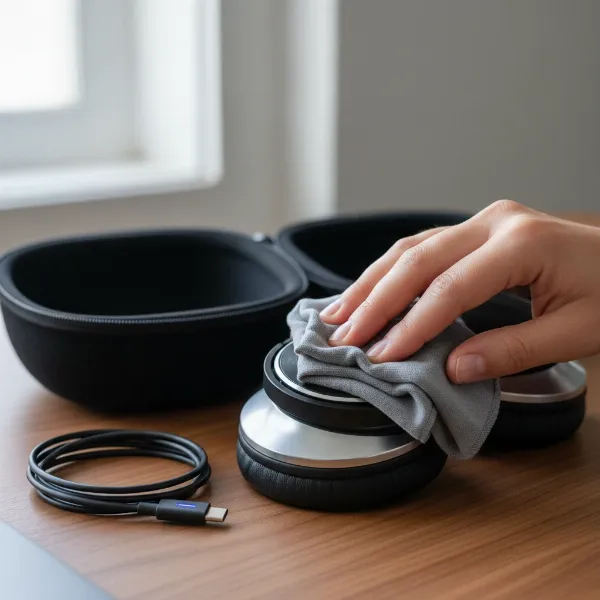
- Regular Cleaning After Use: A quick wipe down with a dry microfiber cloth after each use can prevent the buildup of oils, sweat, and dirt, preserving both the aesthetics and functionality of your headphones.
Proper Care and Maintenance
- Cleaning Routine:
- Power Off and Unplug: Always turn off and unplug your headphones before beginning any cleaning process to prevent accidental damage.
- Detachable Parts: If your headphones have removable ear cushions or ear tips, gently detach them. This allows for a more thorough cleaning.
- Ear Cushions/Pads: For over-ear models, gently wipe the ear cushions with a soft cloth dampened with warm, soapy water (using mild dish soap). Rinse the cloth and wipe again, then allow to air dry completely. Avoid soaking ear cushions unless explicitly stated as safe by the manufacturer.
- Silicone Ear Tips: For earbuds, soak silicone tips in warm, soapy water for about five minutes to loosen grime. Wipe them with a soft cloth or sponge, rinse thoroughly with clean water, and ensure they are completely dry before reattaching.
- Surfaces: Use a soft cloth lightly dampened with a mixture of warm water and mild soap to wipe down the headband, outer ear cups, and cables. Be cautious to prevent moisture from seeping into speaker drivers or electronic components.
- Hard-to-Reach Areas: For stubborn grime or dirt in crevices, lightly moisten a cotton swab with rubbing alcohol. Avoid spraying cleaners directly onto sensitive areas like microphones or electronic components.
- Earwax/Debris: If you notice earwax or dirt on the mesh covering the drivers, gently remove it with a dry toothpick or a soft, dry brush.
- Ports: For headphone jacks or charging ports, use a cotton swab dipped in hydrogen peroxide or isopropyl alcohol to clean and disinfect, ensuring the area is completely dry before use.
- Storage:
- Use a Protective Case: Always store your headphones in their protective case when not in use. This guards against physical damage, dust, and moisture.
- Avoid Extreme Conditions: Keep your headphones away from extreme temperatures. High heat can damage internal electronics, while freezing temperatures can make materials brittle. Store them in a temperate, dry place.
- Keep Them Dry: While some headphones are water-resistant, most are not. Avoid exposing them to rain, heavy sweat, or high humidity to prevent internal damage.
- Cable Care: If your headphones have a detachable cable, loosely coil it and secure it with a tie rather than tightly wrapping it around the headphones, which can strain and damage the wires over time.
- Gentle Handling: Always handle your headphones with care. Avoid pulling them off by the cord or dropping them, as this can damage internal components or connections.
By adhering to these guidelines, your noise cancelling headphones will remain a reliable companion, providing you with a serene and enjoyable audio experience throughout your travels.
Conclusion
Noise cancelling headphones have transcended from a luxury to an essential travel accessory, offering a profound escape from the cacophony of busy environments. Whether you seek enhanced focus, protection for your hearing, or simply a more immersive entertainment experience, the right pair can transform your journeys. By understanding the nuances between active and passive noise cancelling, evaluating critical factors like comfort, battery life, and sound quality, and committing to diligent care, you can select a companion that delivers unparalleled tranquility. Investing in top-tier noise cancelling headphones is not just about superior audio; it’s about investing in your comfort, well-being, and overall travel enjoyment.
What will be your next destination where your noise cancelling headphones become your perfect travel sanctuary?
Frequently Asked Questions
Which type of noise cancelling is best for airplane travel?
Active Noise Cancelling (ANC) is universally considered the best for airplane travel. ANC technology is specifically designed to effectively neutralize the consistent, low-frequency hum of airplane engines and cabin noise, creating a significantly quieter environment. This allows travelers to relax, sleep, or enjoy media without having to increase the volume to unsafe levels.
Are noise cancelling headphones good for protecting hearing on flights?
Yes, noise cancelling headphones are excellent for protecting hearing on flights. By actively reducing ambient cabin noise, they eliminate the need to listen to audio at excessively high volumes, which is a major cause of noise-induced hearing loss. This enables a safer and more comfortable listening experience, reducing auditory fatigue.
What battery life should I look for in travel noise cancelling headphones?
For travel, especially long-haul flights, look for noise cancelling headphones with a battery life of at least 20 hours with ANC enabled. Many premium models now offer 30-60 hours, which is ideal for extended journeys and multiple uses between charges. Fast-charging capabilities are also a convenient feature.
Can I connect noise cancelling headphones to in-flight entertainment systems?
Many noise cancelling headphones, particularly over-ear models, come with an auxiliary cable option in addition to Bluetooth connectivity. This wired connection allows them to be plugged directly into older in-flight entertainment systems that do not support Bluetooth, ensuring you can still enjoy movies and music provided by the airline.
Is there a noticeable difference between expensive and budget noise cancelling headphones?
Yes, there is often a noticeable difference between expensive and budget noise cancelling headphones. Premium models typically offer superior ANC performance, especially against a wider range of frequencies, better sound quality, more comfortable materials for extended wear, and additional features like adaptive ANC or multi-device pairing. Budget options can still provide decent noise reduction for the price, but usually with some compromises.