Choosing the right headphones can dramatically shape your listening experience, whether you’re seeking serene focus or an immersive soundstage. In a world constantly buzzing with distractions, noise-cancelling headphones offer a sanctuary of quiet, while open-back models transport you to a vast sonic landscape. But which one truly fits your lifestyle and listening priorities? This in-depth guide will navigate the intricate differences between these two popular headphone types, dissecting their underlying technologies, benefits, drawbacks, and ideal use cases to help you make an informed decision.
Types of Headphones: Understanding the Core Differences
Headphones come in various designs, but when it comes to how they manage sound, active noise-cancelling (ANC) and open-back models represent two fundamentally different philosophies. Understanding their core mechanisms is key to appreciating their unique advantages.
Active Noise Cancelling (ANC) Headphones
Active Noise Cancelling (ANC) headphones are engineered to create a personal oasis of quiet by actively counteracting ambient sounds. This technology employs microphones embedded in the earcups to detect external noise. These sounds are then analyzed by specialized circuitry, which generates an “anti-noise” sound wave that is precisely 180 degrees out of phase with the incoming environmental noise. When these two opposing sound waves meet, they effectively cancel each other out through destructive interference.
This process is particularly effective at diminishing consistent, low-frequency sounds, such as the hum of an airplane engine, the drone of air conditioning units, or the constant chatter in a busy office. Beyond active cancellation, these headphones also incorporate passive noise isolation through their physical design, using sound-absorbing materials and well-sealed earcups to physically block out some external sounds.
- Principle of ANC: Microphones detect ambient sound, a chip inverts the soundwave, and internal speakers emit this “anti-noise” to neutralize external sound.
- Pros of ANC Headphones:
- Enhanced Concentration: ANC significantly reduces environmental distractions, boosting focus and productivity in noisy settings like offices, cafes, or public transport.
- Improved Audio Quality: By silencing background noise, ANC allows users to enjoy music, podcasts, or audiobooks with greater clarity at lower volumes, reducing the need to dangerously increase volume levels.
- Hearing Protection: Lowering the listening volume in loud environments helps protect long-term hearing health.
- Stress and Fatigue Reduction: Constant exposure to noise can be taxing; ANC provides a quieter environment, reducing auditory fatigue and stress.
- Privacy: They minimize both external noise intrusion and sound leakage, offering a more private listening experience.
- Cons of ANC Headphones:
- Cost: High-quality ANC headphones often come with a premium price tag.
- Battery Dependency: The active noise-cancelling feature requires power, meaning these headphones need regular charging and typically have shorter battery life than their passive counterparts.
- Situational Awareness: The effective isolation can make users unaware of their surroundings, which might be a safety concern in environments like busy streets.
- Pressure Sensation: Some individuals may experience a mild “pressure” or “underwater” feeling, or a faint “hiss” (noise floor), especially in very quiet environments.
- Potential Sound Compromise: While improving clarity by removing noise, some audiophiles suggest that ANC can slightly alter or “soften” the original audio quality, particularly in the mid and high frequencies.
|
Our Picks for the Best Noise cancelling headphones in 2026
As an Amazon Associate I earn from qualifying purchases.
|
||
| Num | Product | Action |
|---|---|---|
| 1 | bmani Hybrid Active Noise Cancelling Headphones,120H Playtime Wireless Headphones Bluetooth 6.0 with Power Display, 6-Mic ENC Calls, 360° Spatial Audio Over Ear Headphones Headset for Travel Game |

|
| 2 | Sony WH-CH720N Noise Canceling Wireless Headphones Bluetooth Over The Ear Headset with Microphone and Alexa Built-in, Black New |
|
| 3 | Hybrid Active Noise Cancelling Headphones 120H Playtime Wireless Headphones Bluetooth 6.0 Over Ear Headphones with 6 ENC HD Call Mic, Hi-Res 360° Spatial Audio ANC Headphone for Travel Workout Black |
|
| 4 | Bose QuietComfort Headphones - Wireless Bluetooth Headphones, Active Over Ear Noise Cancelling and Mic, USB-C Charging, Deep Bass, Up to 24 Hours of Playtime, Twilight Blue - Limited Edition Color |
|
| 5 | TAGRY Hybrid Active Noise Cancelling Headphones 100H Playtime Wireless Over Ear Bluetooth Headphone with Fast Charging Hi-Res Audio Comfort Earcups Headsets for Travel Home Office Phone PC Black |
|
| 6 | Bose QuietComfort Headphones - Wireless Bluetooth Headphones, Active Over Ear Noise Cancelling and Mic, USB-C Charging, Deep Bass, Up to 24 Hours of Playtime, Black |
|
| 7 | Soundcore by Anker Q20i Hybrid Active Noise Cancelling Headphones, Wireless Over-Ear Bluetooth, 40H Long ANC Playtime, Hi-Res Audio, Big Bass, Customize via an App, Transparency Mode (White) |
|
| 8 | Apple AirPods Pro 3 Wireless Earbuds, Active Noise Cancellation, Live Translation, Heart Rate Sensing, Hearing Aid Feature, Bluetooth Headphones, Spatial Audio, High-Fidelity Sound, USB-C Charging |
|
| 9 | Apple AirPods 4 Wireless Earbuds, Bluetooth Headphones, with Active Noise Cancellation, Adaptive, Transparency Mode, Personalized Spatial Audio, USB-C Charging Case, Wireless Charging, H2 Chip |
|
| 10 | Soundcore by Anker Q20i Hybrid Active Noise Cancelling Headphones, Wireless Over-Ear Bluetooth, 40H Long ANC Playtime, Hi-Res Audio, Big Bass, Customize via an App, Transparency Mode (Black) |
|
Passive Noise Cancelling (Open-Back) Headphones
In stark contrast to ANC, open-back headphones are designed with perforated or mesh-like earcups that allow air and sound to flow freely in and out of the headphone enclosure. This design philosophy embraces the surrounding environment rather than actively blocking it, aiming for a more natural and spacious listening experience.
By allowing sound waves to interact with the room and preventing pressure buildup inside the earcups, open-back headphones mimic the acoustics of listening to loudspeakers in a dedicated space. This absence of a sealed chamber means there are fewer internal reflections and resonances that can color the sound, leading to a more transparent and accurate audio reproduction.
- Design and Materials: Open-back headphones feature earcups with vents or grills, typically using lightweight materials to enhance comfort and maintain an open acoustic environment.
- Pros of Open-Back Headphones:
- Expansive Soundstage: This is arguably the most celebrated feature. Open-back designs create a wide, airy, and realistic soundstage, making it feel as if music is coming from around you rather than directly inside your head. This enhances immersion for music, movies, and gaming.
- Natural and Accurate Sound: The open design minimizes unwanted resonances and pressure, resulting in highly transparent, detailed, and uncolored audio. They are often preferred by audiophiles and audio professionals for critical listening, mixing, and mastering.
- Superior Comfort: The airflow prevents heat and moisture buildup around the ears, making open-back headphones exceptionally comfortable for extended listening sessions.
- Sonic Consistency: Bass response tends to be more consistent regardless of how the headphones seal around the ear, as there’s no enclosed chamber to create unpredictable pressure.
- Cons of Open-Back Headphones:
- No Noise Isolation: They offer minimal to no isolation from external sounds. Ambient noise will easily enter, making them unsuitable for noisy environments.
- Significant Sound Leakage: Sound leaks out just as easily as it comes in, meaning those around you will hear your audio. This makes them impractical for public transport, offices, or any shared space where privacy is a concern.
- Less Punchy Bass: While accurate, the bass on open-back headphones might be perceived as less impactful or “thumpy” compared to closed-back models, due to the lack of a sealed chamber to build low-frequency pressure.
- Power Requirements: Some high-impedance open-back models may require a dedicated headphone amplifier to reach their full potential, especially when paired with low-power devices like phones or laptops.
- Fragility and Portability: They are generally less robust and portable, often lacking features like folding hinges found in many closed-back designs.
So, Which is Better: ANC or Open-Back?
The “better” headphone type depends entirely on your intended use and personal preferences.
| Feature / Scenario | Noise Cancelling Headphones (ANC) | Open-Back Headphones |
|---|---|---|
| Noise Isolation | Excellent (Active + Passive) | Poor (Minimal to None) |
| Sound Leakage | Minimal | High |
| Soundstage | Focused, less expansive | Wide, natural, immersive |
| Audio Accuracy | Very good, but can be slightly colored by ANC circuitry | Highly accurate, transparent, uncolored |
| Comfort | Generally good, can trap heat over long periods | Excellent, breathable, ideal for long sessions |
| Battery | Required for ANC | Not required (Passive) |
| Ideal Environment | Noisy (commute, office, plane) | Quiet (home, studio) |
| Best Use Cases | Travel, focus, productivity, casual listening in loud places | Critical listening, audiophile enjoyment, music production/mixing, immersive single-player gaming |
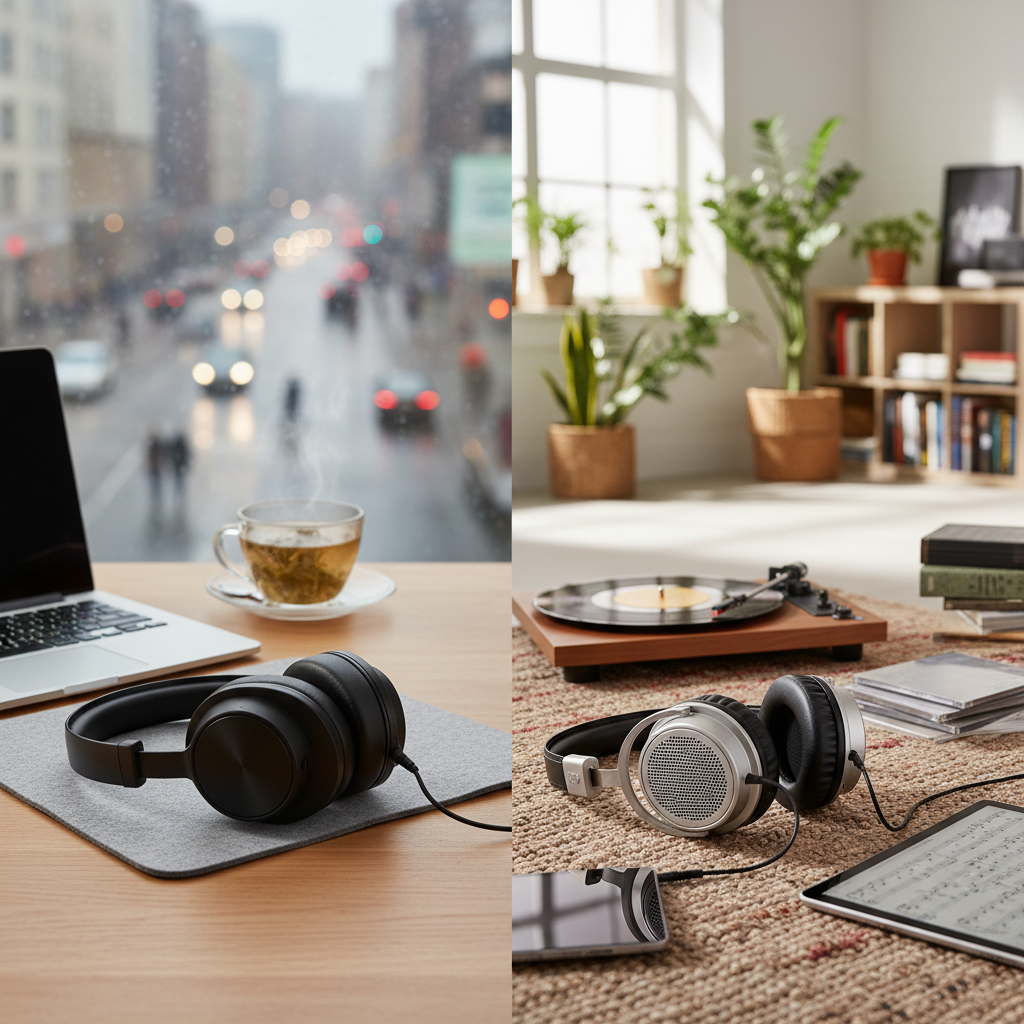
[image-1|noise-cancelling-vs-open-back-headphones-comparison|A person wearing active noise-cancelling headphones in a bustling city environment, contrasted with another person wearing open-back headphones in a serene home studio. This image should clearly show the different use cases.|
Two distinct scenes in a split image. On the left, a person is wearing sleek, over-ear noise-cancelling headphones, looking relaxed in a busy, blurred urban street or subway setting, implying tranquility amidst chaos. On the right, a person is wearing large, intricate open-back headphones, deeply focused on a music mixing board or enjoying music in a calm, well-lit home studio with acoustic paneling, showcasing deep immersion and sound quality. The overall style is realistic and modern.]
Benefits of Noise Cancelling Headphones
Noise-cancelling headphones are more than just a gadget; they are a tool that can significantly enhance various aspects of daily life.
Improve Focus and Productivity
In today’s fast-paced and often noisy world, maintaining concentration can be a challenge. Noise-cancelling headphones create a personal quiet zone, effectively blocking out distractions like office chatter, keyboard clicks, or the hum of air conditioning units. This reduction in ambient noise allows your brain to dedicate more resources to the task at hand, leading to improved cognitive performance and a noticeable boost in productivity for work, study, or creative tasks. For remote workers or those in hybrid work settings, a quality noise-cancelling headset can significantly enhance call clarity and overall efficiency.
“Noise cancelling headphones are an essential must-have for anyone who wants to lead a productive life. They help reduce distractions, increase focus and improve sound quality.” – Fresh ‘n Rebel, Technology Reviewers
Protect Hearing
One often overlooked benefit of noise-cancelling headphones is their role in hearing protection. In noisy environments, people often instinctively turn up the volume to drown out background sounds. This habit of listening at high volumes over extended periods can lead to permanent hearing damage. By effectively reducing external noise, ANC headphones eliminate the need to crank up the volume, allowing you to enjoy your audio content at safer, lower levels. This proactive approach helps preserve your hearing health in the long run.
Enhance Entertainment Experience
Imagine fully immersing yourself in your favorite album, podcast, or audiobook without the intrusion of external noise. Noise-cancelling headphones provide a cleaner audio canvas, making music sound clearer, dialogue more intelligible, and sound effects more impactful. Whether you’re traveling, relaxing at home, or seeking an escape from daily commotion, they elevate your entertainment experience by allowing you to hear every nuance and detail without competing with your surroundings.
Benefits of Open-Back Headphones
Open-back headphones cater to a different kind of audio enthusiast, prioritizing an uncompromised and natural sound experience.
Unrivaled Soundstage and Immersive Experience
Open-back headphones are celebrated for their exceptional soundstage. Because the earcups are open, sound waves can interact with the room, creating a perception that the audio is emanating from a space around you, rather than being confined within your head. This creates a sense of depth, width, and height, making instruments and vocals appear distinctly placed in a three-dimensional soundscape. For audiophiles, this immersive and realistic presentation can make it feel like you’re at a live concert or sitting in the recording studio, truly bringing music to life. This expansive soundstage is also highly valued by gamers for enhanced spatial awareness and by movie enthusiasts for a more cinematic experience.
Natural and Accurate Sound Reproduction
The open design of these headphones prevents pressure buildup and minimizes internal reflections within the earcups, which can color the sound in closed designs. The result is a more transparent, uncolored, and accurate audio reproduction. This fidelity to the original recording is why open-back headphones are often the preferred choice for critical listening, music production, mixing, and mastering engineers who need to hear every detail and nuance of their audio without artificial enhancement. They aim to present the sound as naturally as possible, akin to high-quality studio monitors.
Enhanced Comfort for Extended Listening
Due to their open design, these headphones allow air to circulate freely around your ears. This superior ventilation prevents the heat and moisture buildup often associated with closed-back headphones, significantly reducing ear fatigue during long listening sessions. Many audiophiles find open-back headphones to be more comfortable for hours of uninterrupted listening, making them ideal for dedicated music appreciation or lengthy work sessions in a quiet environment.
Factors to Consider When Choosing
Selecting between noise-cancelling and open-back headphones boils down to a few critical considerations related to your lifestyle, listening environment, and sonic priorities.
Your Listening Environment
This is perhaps the most crucial factor.
- Noisy Environments: If you frequently commute on public transport, work in a bustling office, travel by plane, or live in a loud household, noise-cancelling headphones are the clear winner. They are designed specifically to combat ambient noise and provide a quiet sanctuary.
- Quiet Environments: If your primary listening location is a silent home, a private study, or a dedicated studio, open-back headphones will offer an unparalleled sound experience without the need for active noise cancellation.
Your Priorities: Immersion vs. Isolation
- Ultimate Immersion (Soundstage & Accuracy): For the purest, most natural, and expansive soundstage, where audio fidelity and the feeling of being “in the music” are paramount, open-back headphones are superior. This is for audiophiles, musicians, and anyone who values critical listening.
- Distraction-Free Isolation: If your goal is to block out the world, reduce distractions, and create a peaceful listening or working environment, noise-cancelling headphones excel. This is for productivity, travel, and personal peace.
Portability and Durability
- On-the-Go Use: Noise-cancelling headphones are generally designed with portability and durability in mind for travel and daily commutes. Many models are foldable and built to withstand being carried around.
- Stationary Use: Open-back headphones, while often comfortable, are typically larger and less robust. They are primarily designed for stationary use in controlled environments and are not ideal for portable use due to their open design and size.
Cost and Battery Life
- Cost: Both types can range significantly in price, but high-quality ANC headphones tend to be on the more expensive side due to the advanced technology involved.
- Battery Life: Noise-cancelling headphones require power for their ANC functionality, meaning they have a limited battery life that necessitates regular charging. Open-back headphones are passive, requiring no battery, offering unlimited listening time (unless they are wireless models with additional features, which is rare).
Top Picks by Category (Examples)
While specific models evolve rapidly, certain headphones consistently represent the best in their class.
| Type | Model Example (ANC) | Model Example (Open-Back) |
|---|---|---|
| Premium Flagship | Sony WH-1000XM5, Bose QuietComfort Ultra Headphones | Sennheiser HD 800 S, Focal Clear Mg |
| Mid-Range Excellence | Sony WH-CH720N, JBL Live 670NC | Sennheiser HD 600, Beyerdynamic DT 990 Pro |
| Gaming | SteelSeries Arctis Nova Pro Wireless | Beyerdynamic TYGR 300 R, Philips Fidelio X2HR |
| Portable/Travel | Bose QuietComfort Earbuds II, Apple AirPods Max | N/A (Open-back not suitable for travel) |
Note: Prices vary significantly based on retailers and promotions.
Maintenance Tips for Longevity
Regardless of the type you choose, proper care and maintenance will extend the life and performance of your headphones.
For All Headphones
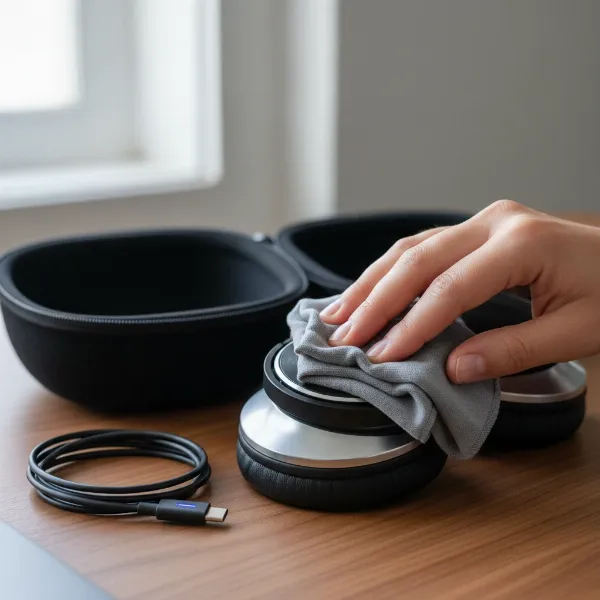
- Clean Regularly: Wipe earcups and headbands with a soft, dry cloth to remove oils and sweat. For earpads, check manufacturer guidelines for cleaning.
- Store Properly: When not in use, store headphones in their case or on a stand to protect them from dust, impacts, and pressure.
- Manage Cables: If wired, coil cables loosely to prevent tangles and damage.
- Avoid Extremes: Protect headphones from extreme temperatures, humidity, and direct sunlight.
Specific to ANC Headphones
- Charge Mindfully: Don’t overcharge or completely drain the battery frequently; follow manufacturer recommendations for optimal battery health.
- Update Firmware: Keep the firmware updated to ensure optimal performance of the noise-cancelling features and connectivity.
Specific to Open-Back Headphones
- Handle with Care: Due to their often more delicate open design and exposed drivers, handle open-back headphones gently to avoid damage to the mesh or internal components.
- Keep Away from Dust: The open design can allow dust to accumulate on the drivers, so keep them covered or stored when not in use.
Conclusion
The choice between noise-cancelling and open-back headphones is a journey into understanding your personal audio landscape. Noise-cancelling headphones are unparalleled tools for creating pockets of quiet in a loud world, enhancing focus, and protecting your hearing by allowing lower listening volumes. They are ideal for commuters, travelers, and anyone seeking productivity in distracting environments. On the other hand, open-back headphones offer an uncolored, expansive, and natural soundstage, making them the preferred choice for audiophiles, critical listeners, and professionals who prioritize sonic accuracy and an immersive, concert-like experience in a quiet setting.
Ultimately, neither is inherently “better”; they simply serve different purposes. By considering your primary use case, listening environment, and desired sound characteristics, you can confidently select the headphone type that will elevate your audio experience to its fullest potential. What kind of sound journey are you ready to embark on?
Frequently Asked Questions
Do noise-cancelling headphones hurt your ears?
No, noise-cancelling headphones are generally safe and can even protect your hearing by reducing the need to listen at high volumes in noisy environments. Some users may experience a mild pressure sensation, but it’s usually harmless and temporary.
Can open-back headphones be used for gaming?
Yes, open-back headphones are excellent for immersive, single-player gaming due to their wide soundstage, which enhances spatial awareness and makes game worlds feel more realistic. However, they are not ideal for competitive gaming or noisy environments, as they don’t isolate sound and leak audio.
What are the main drawbacks of open-back headphones?
The primary drawbacks of open-back headphones are their lack of noise isolation, meaning you’ll hear ambient sounds, and significant sound leakage, which means others around you will hear your audio. This makes them unsuitable for public or shared spaces.
Is it worth investing in expensive noise-cancelling headphones?
For individuals who frequently travel, work in noisy environments, or prioritize concentration and reduced stress, investing in high-quality noise-cancelling headphones can be well worth the cost due to their superior performance and benefits for productivity and well-being.
How do I choose between open-back and closed-back for music production?
For music production, especially mixing and mastering, open-back headphones are generally preferred for their natural, accurate sound reproduction and expansive soundstage, which helps in identifying instrument placement and overall mix balance. Closed-back headphones might be used for tracking to prevent mic bleed, but open-backs offer a more true-to-life representation for critical listening.