In an increasingly noisy world, finding moments of peace and concentration can feel like an impossible task. Whether you’re battling the relentless hum of an airplane, the chatter of an open-plan office, or simply seeking a tranquil environment for sleep or study, managing ambient sound is crucial for well-being and productivity. This comprehensive guide delves into two primary technologies designed to achieve auditory serenity: noise cancelling headphones and white noise devices. We will explore their distinct mechanisms, benefits, limitations, and how to choose the ideal solution to reclaim your focus and calm.
Types of Noise Control Technologies
Understanding the fundamental differences between how these technologies operate is key to making an informed decision. While both aim to mitigate unwanted sound, their approaches are entirely distinct.
Active Noise Cancelling (ANC) Headphones
|
Our Picks for the Best Noise cancelling headphones in 2026
As an Amazon Associate I earn from qualifying purchases.
|
||
| Num | Product | Action |
|---|---|---|
| 1 | Sony WH-CH720N Noise Canceling Wireless Headphones Bluetooth Over The Ear Headset with Microphone and Alexa Built-in, Black New |

|
| 2 | TAGRY Hybrid Active Noise Cancelling Headphones 100H Playtime Wireless Over Ear Bluetooth Headphone with Fast Charging Hi-Res Audio Comfort Earcups Headsets for Travel Home Office Phone PC Black |
|
| 3 | Apple AirPods 4 Wireless Earbuds, Bluetooth Headphones, with Active Noise Cancellation, Adaptive, Transparency Mode, Personalized Spatial Audio, USB-C Charging Case, Wireless Charging, H2 Chip |
|
| 4 | bmani Hybrid Active Noise Cancelling Headphones,120H Playtime Wireless Headphones Bluetooth 6.0 with Power Display, 6-Mic ENC Calls, 360° Spatial Audio Over Ear Headphones Headset for Travel Game |
|
| 5 | Hybrid Active Noise Cancelling Headphones 120H Playtime Wireless Headphones Bluetooth 6.0 Over Ear Headphones with 6 ENC HD Call Mic, Hi-Res 360° Spatial Audio ANC Headphone for Travel Workout Black |
|
| 6 | Bose QuietComfort Headphones - Wireless Bluetooth Headphones, Active Over Ear Noise Cancelling and Mic, USB-C Charging, Deep Bass, Up to 24 Hours of Playtime, Twilight Blue - Limited Edition Color |
|
| 7 | Bose QuietComfort Headphones - Wireless Bluetooth Headphones, Active Over Ear Noise Cancelling and Mic, USB-C Charging, Deep Bass, Up to 24 Hours of Playtime, Black |
|
| 8 | Soundcore by Anker Q20i Hybrid Active Noise Cancelling Headphones, Wireless Over-Ear Bluetooth, 40H Long ANC Playtime, Hi-Res Audio, Big Bass, Customize via an App, Transparency Mode (Black) |
|
| 9 | Soundcore by Anker Q20i Hybrid Active Noise Cancelling Headphones, Wireless Over-Ear Bluetooth, 40H Long ANC Playtime, Hi-Res Audio, Big Bass, Customize via an App, Transparency Mode (White) |
|
| 10 | Apple AirPods Pro 3 Wireless Earbuds, Active Noise Cancellation, Live Translation, Heart Rate Sensing, Hearing Aid Feature, Bluetooth Headphones, Spatial Audio, High-Fidelity Sound, USB-C Charging |
|
Active Noise Cancelling (ANC) headphones represent a sophisticated electronic solution to external noise. Instead of merely blocking sound, they actively neutralize it.
How ANC Technology Works
ANC technology functions on the principle of destructive interference. Tiny microphones embedded in the headphones capture incoming ambient noise. An internal digital signal processor (DSP) then analyzes the sound wave’s frequency and amplitude in real-time. Crucially, it generates an inverted “anti-noise” sound wave—a mirror image where the original wave’s peak aligns with the anti-noise’s trough. When these two waves meet within the ear cup, they effectively cancel each other out, dramatically reducing the perceived volume of the external sound before it reaches your eardrum. This process is particularly effective against consistent, low-frequency sounds.
Pros and Cons of ANC Headphones
The primary advantage of ANC headphones is their ability to create a “bubble of silence,” allowing you to listen to audio at lower volumes or simply enjoy quiet. They significantly reduce the drone of airplane engines, train noise, and general low-frequency hums. This leads to improved focus, better audio clarity, and a more relaxing experience during commutes or travel. However, ANC can sometimes induce a sensation of pressure or affect equilibrium for some users. They are also less effective at canceling out sudden, unpredictable, or high-frequency noises like human speech, crying babies, or sudden clattering sounds.
Factors Affecting ANC Effectiveness
The effectiveness of ANC depends on several factors, including the quality of the microphones and DSP, the design of the earcups (which also provide passive noise isolation), and the consistency of the ambient noise. Premium ANC headphones often feature adaptive ANC, which automatically adjusts cancellation levels based on your surroundings. A good seal around the ear is also crucial for optimal performance, as even small gaps can compromise the noise-cancelling effect.
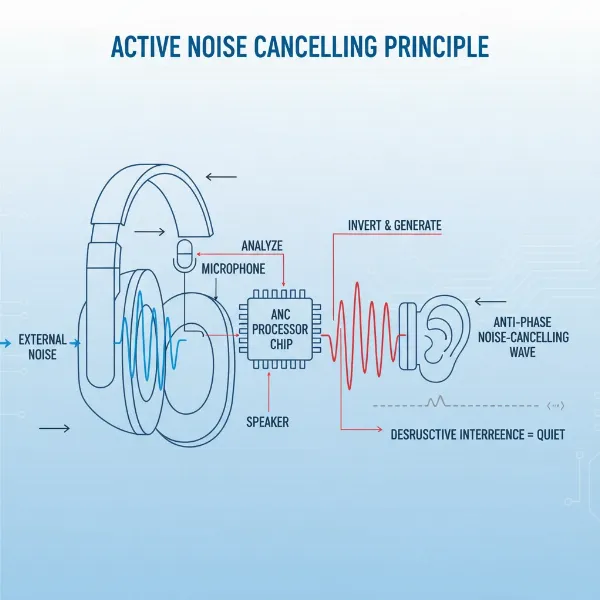 Diagram illustrating how Active Noise Cancelling headphones work by generating anti-noise waves to cancel external sound.
White Noise Devices
White noise devices, often referred to as sound machines, approach noise control from a different angle: sound masking. Instead of canceling noise, they introduce a consistent ambient sound to make other noises less noticeable.
How White Noise Works (Masking Principle)
White noise is a specific type of sound that encompasses all audible frequencies at equal intensity. It sounds like a gentle static, similar to an untuned radio or a whirring fan. The mechanism behind its effectiveness is sound masking. By providing a steady, broadband sound, white noise raises the overall ambient noise floor. This reduces the “signal-to-noise ratio” of distracting sounds (like conversations or sudden thumps), making them less distinct and therefore less likely to capture your brain’s attention. Your brain naturally tunes out consistent, unstructured noise, allowing more disruptive sounds to blend into the background.
Pros and Cons of White Noise Devices
White noise is highly effective at masking a wide range of sounds, including sudden noises and human speech, which ANC headphones struggle with. This makes it excellent for improving focus in an office, aiding sleep by covering snoring or traffic, and creating a calming environment for relaxation or meditation. White noise machines are generally more affordable than high-end ANC headphones and can cover an entire room, benefiting multiple people. However, white noise adds sound to your environment, which some individuals may find distracting or uncomfortable, especially if the sound loops are noticeable or the volume is too high. It doesn’t eliminate noise; rather, it makes it less prominent.
Comparison with Other Noise Colors (Pink, Brown)
Beyond white noise, other “noise colors” like pink and brown noise are also popular for masking and relaxation. Pink noise has equal energy per octave, meaning it emphasizes lower frequencies, resulting in a deeper, softer sound often compared to rainfall or rustling leaves. Brown noise (or red noise) goes even further, emphasizing even lower frequencies, producing a deeper, rumbling sound akin to a strong waterfall or heavy rain. Many find pink and brown noise more soothing and less “hissy” than pure white noise, making them preferable for sleep or extended listening. These different colors offer varied auditory textures, allowing users to choose what best suits their preference for masking specific types of noise or promoting relaxation.
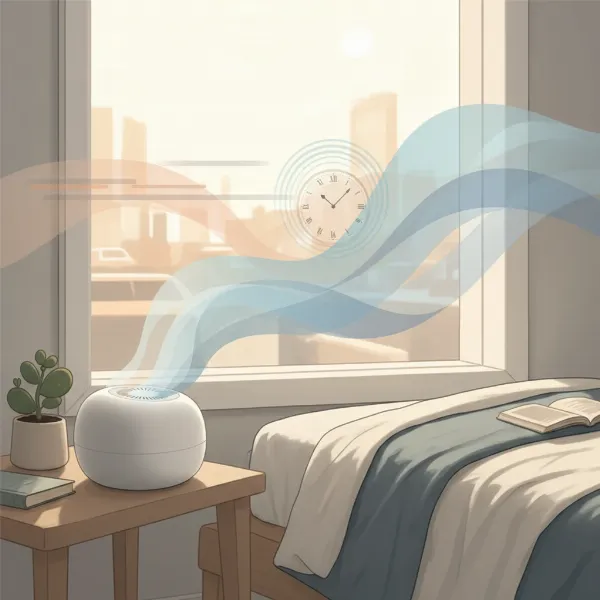 An illustration of a modern white noise machine emitting sound waves that blend with and mask distracting environmental noises for a user in a bedroom.
Benefits of Noise Control
Both noise cancelling headphones and white noise devices offer significant benefits that extend beyond simply reducing sound. They contribute to enhanced cognitive function, improved health, and overall quality of life.
Enhancing Focus and Productivity
In today’s distraction-rich environments, maintaining concentration is a challenge. Noise control technologies provide a valuable tool to carve out a mental space for productive work and study.
Reducing Distractions in Various Environments
Whether you’re working in a bustling open-plan office, studying in a noisy dorm, or trying to concentrate at a busy coffee shop, ambient sounds can constantly pull your attention away. Noise cancelling headphones excel at muting the low-frequency drone of office HVAC systems or public transport, while white noise devices effectively mask intermittent conversations and unexpected sounds. By creating a more consistent auditory environment, both technologies minimize the mental effort required to filter out distractions, allowing your brain to allocate more resources to the task at hand.
Improving Concentration for Work and Study
A steady auditory backdrop, whether it’s the quiet provided by ANC or the masking sound of white noise, helps to sustain attention and mental clarity. For students, this means less time rerouting their focus from an unexpected noise and more time engaged with their learning materials. Professionals can experience increased productivity and deeper work sessions without the constant interruptions that break flow. White noise has been shown to improve focus and even cognitive performance, memory retention, and learning, especially for those sensitive to sensory input or with conditions like ADHD.
The Role of a Stable Auditory Environment
The human brain is highly attuned to changes in its auditory environment. Sudden or unpredictable sounds are particularly disruptive because they trigger an alert response. By either eliminating specific noises (ANC) or creating a continuous, undifferentiated soundscape (white noise), these technologies stabilize the auditory environment. This predictability allows the brain to relax its guard, leading to sustained attention and reduced cognitive load. It’s like having a consistent background hum that fades into imperceptibility, rather than a cacophony of unpredictable noises vying for your attention.
Protecting Hearing and Reducing Stress
Beyond immediate focus, long-term exposure to noise can have detrimental effects on both hearing health and overall stress levels. Noise control offers a preventative and remedial solution.
Preventing Long-Term Noise Damage
One often-overlooked benefit of noise cancelling headphones is their role in hearing protection. By reducing ambient noise, they allow you to listen to music or other audio at significantly lower volumes without sacrificing clarity. This minimizes the risk of noise-induced hearing loss, which can result from prolonged exposure to loud sounds. In environments like airplanes or noisy commutes, ANC helps you avoid the temptation to crank up the volume, thereby safeguarding your ears.
Alleviating Noise-Induced Fatigue
Constant exposure to unwanted noise, even at moderate levels, can lead to mental fatigue and stress. The brain expends energy constantly processing and attempting to filter out these sounds. Both ANC and white noise reduce this cognitive burden. By lowering the overall noise perceived or making it less disruptive, these technologies help reduce the mental exhaustion that comes from living or working in loud environments. This can lead to greater energy levels, improved mood, and a reduced sense of being overwhelmed by your surroundings.
Impact on Overall Well-being
A calmer auditory environment contributes significantly to overall well-being. Reduced noise-related stress can positively impact sleep quality, mood, and even physical health. White noise, in particular, has been linked to stress reduction and anxiety alleviation by calming the sympathetic nervous system, similar to meditation. For individuals who are highly sensitive to sound, these tools can be invaluable in creating a more comfortable and manageable daily existence, fostering a sense of control over their personal soundscape.
Improving Sleep Quality
Sleep is profoundly affected by our auditory environment. Disruptive noises are a leading cause of poor sleep, and noise control technologies can be powerful allies in achieving restful nights.
Masking Disruptive Sounds for Better Sleep
Intermittent noises such as snoring, traffic, neighbors’ sounds, or sudden household disturbances are notorious for waking us up or preventing us from falling asleep. White noise machines excel in this area by creating a consistent “sound blanket” that covers these disruptive peaks. Instead of being jolted awake by a sudden noise, the sound blends into the continuous background, making it less likely to trigger an arousal response. This helps you fall asleep faster and stay asleep longer.
Creating a Conducive Sleep Environment
A silent room can sometimes be too quiet, making even minor sounds seem amplified and distracting. Both white noise and the subtle quiet of ANC headphones can create a more soothing and predictable auditory environment for sleep. While white noise machines are typically used for room-wide sound masking, some people use noise cancelling headphones to block out external disturbances while sleeping, especially when traveling or in shared accommodations. The steady presence of a non-alarming sound, or the absence of disturbing ones, signals to the brain that the environment is safe and calm, promoting relaxation and the transition into sleep.
Relevance for Individuals with Sleep Issues
For those struggling with insomnia, light sleep, or living in noisy urban settings, white noise devices can be a game-changer. They provide a simple, non-pharmacological solution to improve sleep hygiene. By consistently masking noises that would otherwise interrupt the sleep cycle, these devices support deeper, more restorative sleep, leading to improved energy and cognitive function during waking hours. Some devices even offer specific “sleep-friendly” noise colors like pink or brown noise, or nature sounds like rain or ocean waves, which many find particularly effective for relaxation and sleep.
Noise Cancelling Headphones vs. White Noise Devices: A Detailed Comparison
To highlight the core differences and help you decide, here’s a detailed comparison of noise cancelling headphones and white noise devices:
| Feature | Noise Cancelling Headphones (ANC) | White Noise Devices |
|---|---|---|
| Core Mechanism | Destructive interference (generates “anti-noise” to cancel sound waves). | Sound masking (adds ambient sound to cover or obscure other distractions). |
| Target Noise | Primarily consistent, low-frequency hums (e.g., airplane engines, HVAC, bus drone). | Broad spectrum, effective at masking sudden noises, conversations, and environmental chatter. |
| Effect | Actively reduces the perceived volume of external noise, creating a sensation of relative silence. | Blends with and makes other sounds less distinguishable, lowering their perceived intrusiveness. |
| Coverage | Personal (for the wearer only). | Area/Room-wide (can benefit multiple people in a space). |
| Portability | High (worn on head/in-ear, easily travel-friendly). | Varies (dedicated machines are stationary, but portable devices and apps are available). |
| Sound Output | Primarily for personal audio listening (music, calls, podcasts) with noise reduction. | Generates continuous ambient sound for an environment. |
| Battery Life | Limited by rechargeable battery, typically 20-60 hours. | Varies; dedicated machines are usually plug-in, portable ones have rechargeable batteries. |
| Cost | Generally higher, especially for effective premium models (e.g., $200-$550+). | Generally lower, wide range (apps often free, basic machines $25-$100, advanced up to $200+). |
| Best Use Cases | Travel (planes, trains), noisy commutes, deep personal focus, gaming, immersive audio. | Sleep, office focus (open-plan), masking speech, general relaxation, nurseries. |
| Potential Issues | Can cause a “pressure” sensation; less effective for sudden/high-frequency noises. | Some may find added sound distracting; can have noticeable loops; effectiveness depends on volume/sound type. |
“Active noise cancellation turns the volume of the world down, while white noise adds to the volume of the world. While fundamentally different, understanding their unique strengths can unlock a powerful combined solution for ultimate quiet.”
Choosing the Right Solution: A Buying Guide
Selecting between noise cancelling headphones and white noise devices, or even opting for a combination, depends heavily on your individual needs and the specific auditory challenges you face.
Assess Your Needs and Environment
Start by clarifying what you want to achieve and where you’ll be using the device.
- Primary Goal: Are you looking to achieve deep focus for work, get undisturbed sleep, enjoy immersive entertainment, or simply find peace in a noisy environment? Your main objective will guide your choice.
- Environment of Use: Consider where you spend most of your time. Is it a personal workspace, a shared office, your bedroom, on public transport, or during air travel? Noise cancelling headphones are ideal for personal, mobile use, while white noise machines are best for fixed locations like a room.
- Type of Noise: What kind of noise do you primarily need to combat? If it’s consistent low-frequency hums (e.g., engines, fans), ANC headphones are highly effective. If it’s intermittent sounds, human speech, or general environmental chatter, white noise devices often perform better at masking.
Key Factors to Consider
Once you’ve assessed your needs, evaluate these critical features:
- Technology (ANC, Passive, or White Noise Type): For headphones, decide if you need active cancellation or if passive isolation (from well-fitting earcups/tips) is sufficient. For white noise, consider if you prefer pure white noise, or the softer, deeper tones of pink or brown noise, or even nature sounds.
- Sound Quality (for Headphones) / Sound Variety (for White Noise): If you’re buying headphones for music, audio fidelity is crucial. For white noise machines, look for a wide variety of non-looping sounds to prevent auditory fatigue.
- Comfort and Fit (Headphones) / Portability (Both): Headphones must be comfortable for extended wear. For white noise, decide if you need a portable, battery-powered device for travel or a stationary plug-in unit.
- Battery Life and Power Source: ANC headphones are battery-dependent; longer battery life is a significant advantage. White noise machines can be battery-operated for portability or plug into a wall.
- Additional Features: Do you need features like transparency mode (to hear your surroundings) on headphones, or timers, nightlights, or smart app control on white noise machines?
- Budget: Both categories span a wide price range. Determine how much you’re willing to invest based on the importance of the features to you.
Top Picks by Use Case
Here are some top recommendations tailored to specific needs:
- Best for Travel: Sony WH-1000XM5 or Bose QuietComfort Ultra Headphones. These models offer industry-leading ANC, superior comfort for long journeys, and excellent sound quality for entertainment on the go.
- Best for Sleep: LectroFan Classic or Snooz Original white noise machines. These devices provide a consistent, non-looping sound (fan sounds or electronically generated white/pink/brown noise) that effectively masks nighttime disturbances. The Dohm Classic is another excellent mechanical fan option.
- Best for Office Focus: A combination approach is often ideal. Sennheiser Momentum 4 Wireless headphones offer excellent ANC and impressive battery life for extended work sessions, while a LectroFan Evo or HoMedics Sound Spa can provide ambient masking for your personal workspace if an open environment is unavoidable.
Tips for Maximizing Effectiveness
Once you’ve chosen your noise control solution, a few best practices can help you get the most out of it.
Using Noise Cancelling Headphones
- Ensure Proper Fit: For optimal ANC and passive noise isolation, ensure your headphones or earbuds fit snugly and create a good seal around or in your ears. Experiment with different ear tip sizes if available.
- Combine with Music or Low-Level Noise: For an even deeper sense of quiet, or to mask high-frequency sounds that ANC struggles with, play instrumental music, binaural beats, or even low-level white/pink/brown noise through your ANC headphones. This creates a multi-layered barrier against distractions.
- Adjust ANC Levels: Many premium ANC headphones offer adjustable noise cancellation levels or transparency modes. Experiment to find the balance that works best for your environment and personal comfort. Use transparency mode when you need to be aware of your surroundings, such as crossing a street or listening to announcements.
Using White Noise Devices
- Experiment with Different Noise Colors: Don’t limit yourself to just white noise. Try pink, brown, or nature sounds to discover which spectrum is most soothing or effective for masking the specific noises in your environment. Many devices offer a variety of options.
- Find Optimal Volume and Placement: The goal is to mask, not to overwhelm. Start with a low volume and gradually increase it until distracting noises are less noticeable. Place the device strategically between you and the noise source if possible, or centrally in a room for even coverage. Avoid placing it too close to your head, especially at high volumes, to protect your hearing.
- Consider Non-Looping Sound Options: Repetitive sound loops can become distracting. Opt for devices that generate genuinely random, non-repeating sounds (like those with actual fans or advanced digital synthesizers) or have very long, imperceptible loops. Apps can also offer a wide range of continuous soundscapes.
Conclusion
Both noise cancelling headphones and white noise devices offer powerful solutions for managing our auditory environment, each with unique strengths. Noise cancelling headphones are a personal sanctuary, actively reducing consistent low-frequency distractions to provide a private bubble of quiet or enhance your personal audio. White noise devices, conversely, create a room-wide sound blanket, masking a broader spectrum of noises—especially speech and sudden sounds—to promote focus and improve sleep.
Ultimately, the choice depends on your specific needs, the type of noise you encounter, and your preferred method of achieving tranquility. For personal, on-the-go quiet, ANC headphones are unparalleled. For creating a calm, masking environment in a fixed space, white noise machines shine. Many find that using both technologies in conjunction offers the most comprehensive approach to auditory peace, addressing different noise profiles simultaneously. By understanding these distinctions, you can effectively navigate the soundscape of modern life and find your ideal path to concentration and calm.
What does your ideal soundscape sound like?
Frequently Asked Questions
What is the main difference between active noise cancelling and white noise?
The main difference lies in their mechanism: Active Noise Cancelling (ANC) headphones actively reduce noise by generating an “anti-noise” wave that cancels out external sounds, primarily effective against consistent low-frequency hums. White noise devices, on the other hand, add a broadband, static-like sound to the environment to “mask” or cover up other noises, making them less noticeable.
Can I use noise cancelling headphones and white noise together?
Yes, using them together can be highly effective. ANC headphones can handle the low-frequency hums, while playing white, pink, or brown noise through the headphones can further mask mid to high-frequency sounds like speech or sudden noises that ANC alone might not fully block. This combined approach creates a very comprehensive shield against distractions.
Is white noise better than silence for studying?
For many individuals, yes. While silence is ideal for some, an overly quiet environment can make even minor sounds distracting. White noise creates a consistent auditory backdrop that helps mask these minor distractions and can reduce the brain’s effort to filter out intermittent sounds, thereby improving concentration and focus for studying. Some studies suggest it can even enhance cognitive performance.
Are noise cancelling headphones safe for long-term use?
Generally, yes, when used responsibly. Noise cancelling headphones can actually protect your hearing by allowing you to listen to audio at lower, safer volumes. However, prolonged use, especially at high volumes, can still be detrimental. Some users might experience a mild “pressure” sensation, but this is typically harmless and varies by individual and headphone model.
What is pink noise, and how is it different from white noise?
Pink noise is a “color” of noise similar to white noise but with a different frequency distribution. While white noise has equal energy across all audible frequencies, pink noise has equal energy per octave, meaning it emphasizes lower frequencies. This gives pink noise a deeper, softer, and often more natural sound, comparable to rainfall or a gentle waterfall, which many find more soothing than the “hissy” sound of pure white noise, especially for sleep and relaxation.